With nutrition information panels, ingredient lists, and unfamiliar terminology, baby formula labels can be confusing and overwhelming.
Together with our LittleOak paediatric nutritionist, we’ve created this simple guide to help you learn how to read baby formula labels and understand exactly what matters when comparing products.
How to understand baby formula nutrition panels
When you turn over a can of formula, you’ll find the Nutrition Information Panel (NIP). This is a breakdown of the essential nutrients your baby needs for healthy growth and development. Here are the four core areas to focus on:
Energy (kilojoules/calories):
This is the essential fuel required for your baby’s overall energy needs during rapid early development. Too few calories can stunt weight gain and adequate development, while too many can risk metabolic issues. Here at LittleOak, our formula is carefully balanced within the recommended range provided by Food Standards Australia New Zealand, ensuring just the right amount of energy for healthy growth for every stage.
Fat:
Fat is a major source of energy for brain and nervous system development and also helps with the absorption of fat-soluble vitamins. Too little fat means too little energy while too much fat can put strain on an immature digestive system, leading to gas, discomfort, bloating, diarrhoea and constipation.
Protein:
Essential for muscle and tissue development. Too little protein can affect muscle and tissue development while too much protein can strain immature kidneys which can result in foamy urine and increased effort to urinate.
Carbohydrates:
Essential for energy production. Too little can force the body to use protein as an energy source while too many carbs can lead to blood sugar fluctuations and upset tummies.
Other important label information
Stage / age range:
-
Stage 1: 0–6 months
-
Stage 2: 6–12 months
-
Stage 3: 12+ months
Country of manufacture:
Products made in Australia or New Zealand must meet strict guidelines set by Food Standards Australia New Zealand (FSANZ).
Expiry date:
Ensures product safety and nutrient integrity.
Preparation instructions:
Unless advised by a health professional, always follow the instructions exactly to ensure correct nutritional balance.
What to look for when choosing a baby formula
Here at LittleOak, we believe that the very best nutrition starts with the most beautiful, premium ingredients. Here are a few key considerations when choosing a formula for your baby.
Understanding carbohydrate sources:
-
Sucrose and Glucose:
- Provide quick energy
- May cause blood sugar spikes and energy crashes
-
Maltodextrin:
- Highly processed
- Digests rapidly
- May cause blood sugar fluctuations, colic, reflux, or diarrhoea
-
Lactose:
- Gentle on tiny tummies
- Supports healthy gut microbiome development
- Helps with calcium and mineral absorption
- Provides steady energy without sharp spikes
At LittleOak, we choose lactose as the primary carbohydrate source because it’s closer to nature and more gentle on developing digestive systems.
Understanding protein sources:
-
Cow milk (A1 proteins):
- Some babies find A1 proteins harder to digest due to their harder and larger curd formation in the gut. A1 proteins may also produce more digestive byproducts which can irritate the gut
-
Goat milk (A2 proteins):
- Gentle on developing digestive systems due to softer and smaller curd formation
- Typically digested more quickly
- May reduce risk of colic or other digestive issues
-
Hydrolysed:
- Often used for children with allergies that cannot tolerate animal protein formulas.
Ingredients to be wary of
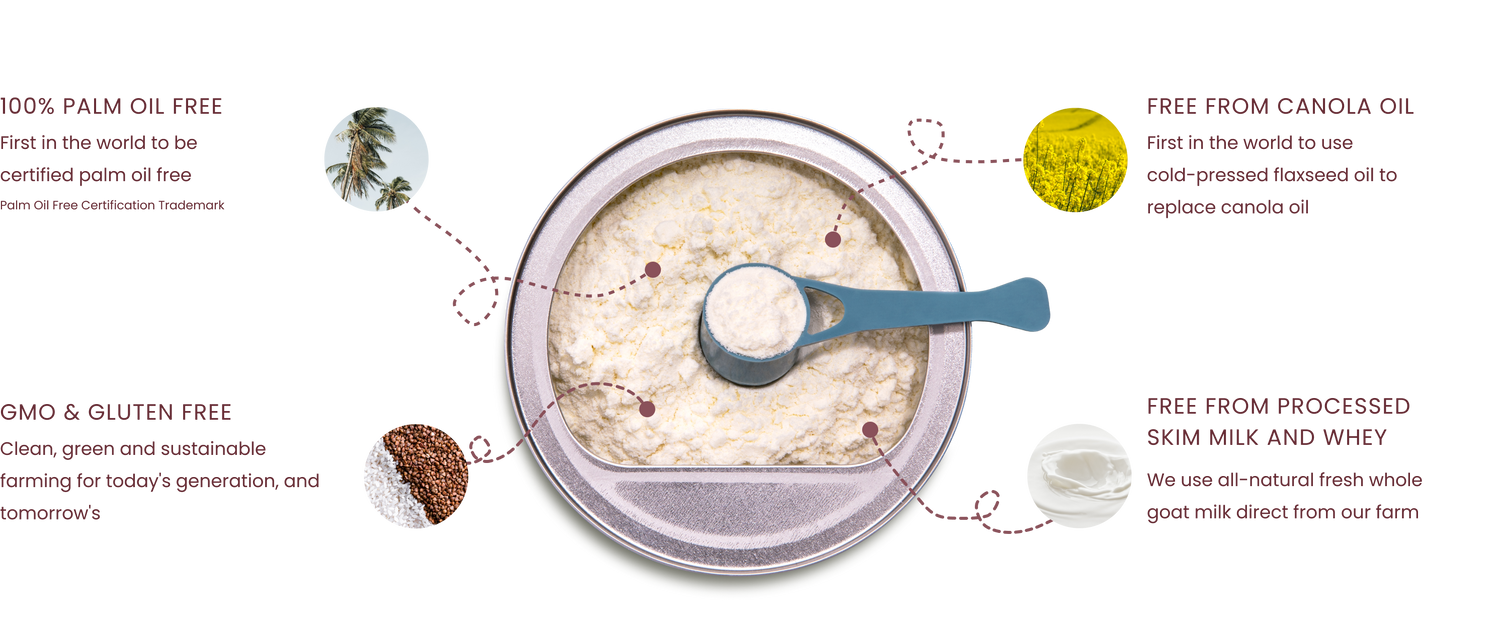
- Palm Oil: can interfere with nutrient absorption and is hard for immature digestive systems to digest
- Added sucrose: may cause blood sugar spikes
- Added maltodextrin: highly processed and can result in digestive issues such as gas, loose stools, bloating, reflux and colic
- Additives and flavourings: these ingredients are heavily processed and may shape early taste preferences, making it harder for babies to develop a natural acceptance of whole, unprocessed flavours
Summary checklist for a safe formula choice
- Lactose as main carbohydrate source
- Prebiotics included
- DHA and ARA for brain and eye development
- No added sugar, sucrose or glucose
- No palm or canola oil